
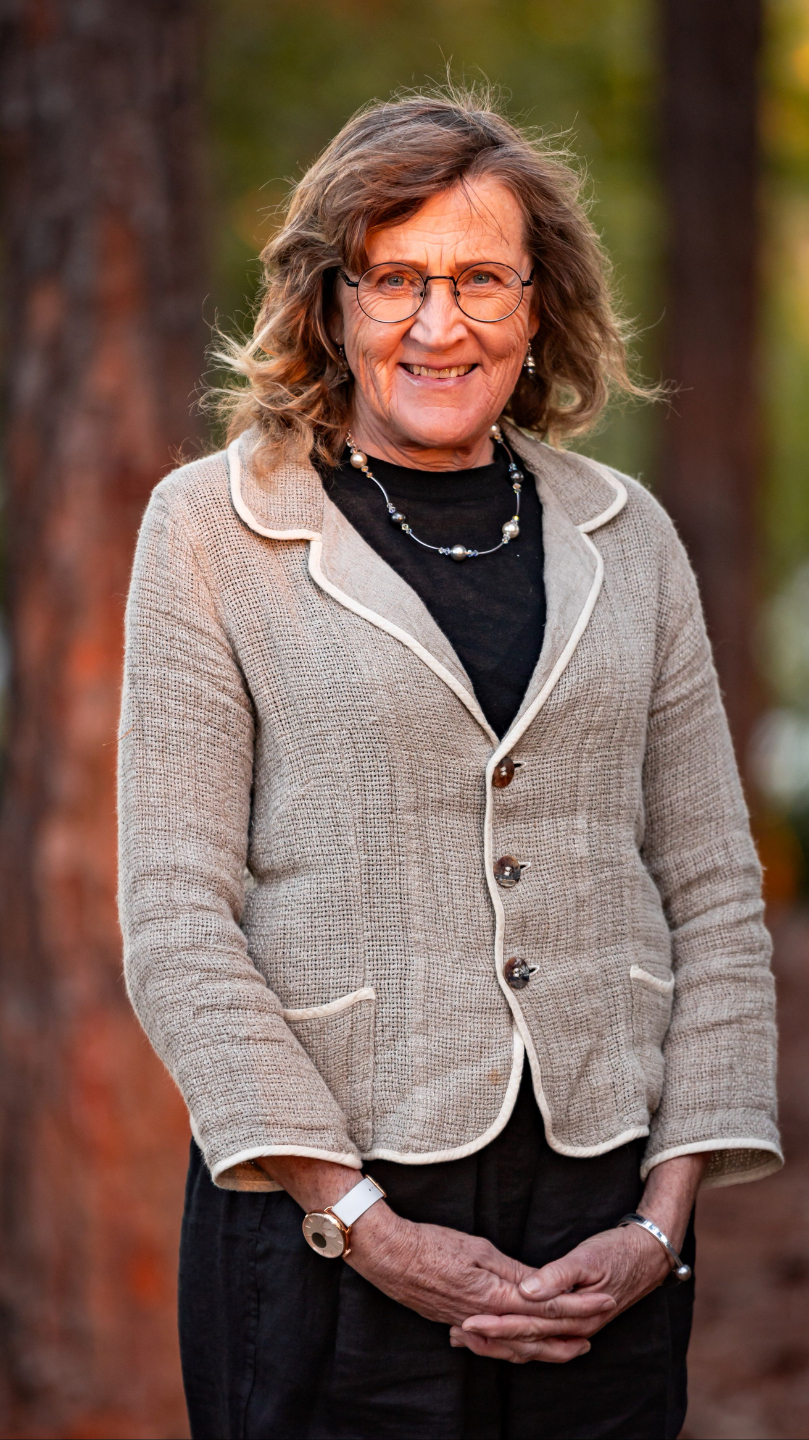
Hello, I'm Sharon
I created Mosaic Health Consulting to share what I’ve learned about turning good ideas into meaningful, sustainable improvement in healthcare.
My work bridges the gap between research and real-world practice, by connecting implementation science, systems thinking, and practical experience to support people navigating complexity.
Over my career, I’ve worked across clinical practice, senior leadership, and academia, and have been fortunate to learn from generous mentors and colleagues along the way.
I’ve also experienced the realities many health professionals face; limited time, competing priorities, and increasing pressure to improve.
Led by Experience. Inspired by Curiosity.
These experiences have shaped how I think about change. It needs to be grounded in evidence, but always responsive to context.
A consistent thread in my work has been curiosity, that is taking the time to understand what’s really happening before deciding what to do.
I now draw on this combined experience to help ensure that your time and effort invested in improvement is purposeful, effective, and sustainable.
At its core, my work is about bringing the right people, ideas, and context together, to create something that works in practice.
My Story
Over 30 years ago, I stepped into my first formal leadership role, somewhat reluctantly. To my surprise, I absolutely loved it. Leading a team of enthusiastic and talented clinicians was both a privilege and a turning point, sparking a passion for leadership that has stayed with me ever since.
In the years that followed, I moved into a range of management roles. While these were rewarding, they also brought me face-to-face with uncertainty and confusion. At times, I felt overwhelmed, and unsure where to turn for support. Without a formal pathway into management training, I sought out mentors and learned from colleagues. I observed, listened and asked questions to build my understanding about how people work together to lead and improve care.
A pivotal moment came when I stepped away from management to undertake a PhD. This gave me the space to focus my curiosity and explore what helps healthcare teams work effectively. From this positive experience of doing research, I continued to explore how research can inform practice in meaningful ways. It also led to a new direction in my work: teaching and supporting others to develop their leadership and implementation capabilities.
Since then, I’ve worked across senior roles in healthcare and academia, with a consistent focus on improvement and innovation. I’ve had the privilege of supporting colleagues in their research and leadership journeys, and of contributing to initiatives that have been implemented, evaluated, and shared more widely through academic work.
Looking back, a consistent thread has been curiosity, in questioning both how things work, and how they could work better. Over time, I’ve come to see this not just as a personal trait, but as a practical leadership capability in complex systems.
Today, I draw on these experiences to support others navigating similar challenges. I’m here to share what I’ve learned, to inspire, and to collaborate with those who are equally passionate about creating meaningful change in healthcare.
Key Academic Articles
Here are recent articles I have written with colleagues about important healthcare ideas.
Navigating Complexity in Healthcare Systems
Relationship Between Research Culture and Research Activity of Medical Doctors: A Survey and Audit
This article explores the connection between the research culture and the research activities of medical doctors within a complex health service in Queensland.
The findings revealed that while the research capacity and culture varied significantly across different specialty groups, there was a positive correlation between a team's research output, and their self-reported research capacity and culture. This suggests that tailored interventions might be necessary to enhance research capacity across different specialty teams, taking into account their unique baselines of capacity and activity.
The study concludes that a combination of objective research activity measures and subjective self-reports can provide a comprehensive evaluation of research capacity-building initiatives.
Implementing Research to Improve Healthcare Practice
This article is the most recent in a series of articles describing the implementation of structured journal clubs in routine clinical practice. The findings describe the feasibility and positive benefits for individual clinician's knowledge, skills and confidence in using research to change their clinical practice over time.
More information about the TREAT (Tailoring Research Evidence and Theory) format can be found at Home - TREAT Journal Clubs
Implementation research is a key driver in improving health services by ensuring that evidence-informed interventions are effectively applied in practical healthcare settings. It addresses the challenges of applying research findings in real-world scenarios. This type of research is essential for improving the implementation of health programs and practices.
Leading Innovation in Complex Healthcare Systems
This article explores how embedded research fellows used a diverse range of knowledge brokering activities to engage research-interested allied health clinicians in completing research projects within a large Australian health service. Research fellows customised research engagement strategies for over 20 clinicians, connecting their individual motivation and research skills, in their local context, to improve clinical practice.
The findings from this innovative study suggest that health and academic leaders should consider embedding research fellows in clinical settings, specifically to act as knowledge brokers for research-interested clinicians. This structured approach can drive system-wide innovation by creating clinician-driven research that directly impacts patient care and healthcare service delivery.